
Conventional Sailboat Racing Around Buoys
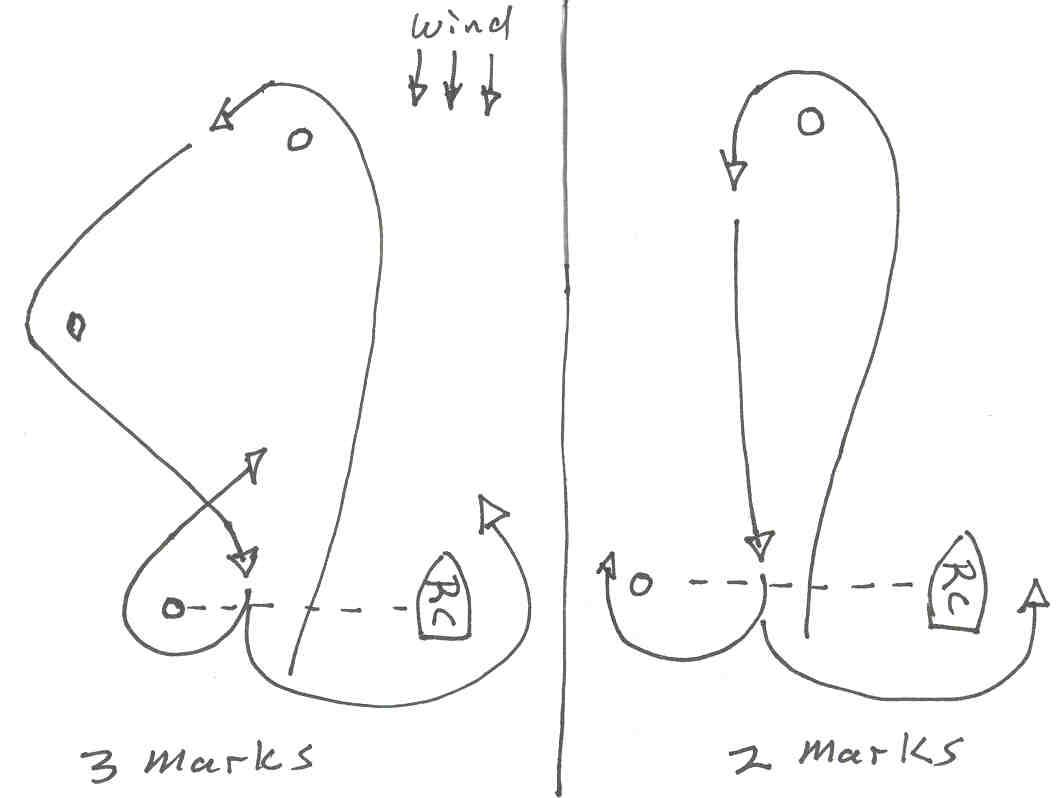
The Course
Typical sailboat racing is to windward and leeward marks. Sometimes there are 2 marks, sometimes 3 or more. A starting line is usually formed between a buoy and race committee boat, or could be between 2 buoys, or a buoy and a fixed object such as the dock.
The course usually runs upwind so that you can have a beat to windward, tacking back and forth. This is an exciting part of the race, boats have to avoid each other and make progress to windward.
The down wind portion of the race is just as exciting. Someone can pull behind you and steal your wind, slowing you down so that they can pass you. Don't feel helpless though, because you can turn around and steal their wind, and pass them.
Starting The Race
You sail around on the leeward side of the starting line trying not to run into each other, and observing the right of way rules. There are many different flag and signal systems to start a race. My favorite is very simple and all you need is one guy with a whistle and stopwatch:
3 blasts of a horn or whistle at 5 minute warning
2 blasts at the 1 minute warning
1 long blast at the start
It is very important to have the 5 minute warning be exactly 5 minutes from the start horn, there are a number of tactics that require accurate timing for crossing the start line. One tactic is at the 1 minute warning, sail away from the starting line for 30 seconds, turn and sail for the start line at full speed. If you do it right, you can cross the line at top speed and have the advantage on the first lap. Another tactic is to just sit at the start line with no speed, and just before the start horn, haul in your sheets and take off.
Right Of Way Rules
Most important: puddle duckers do whatever it takes, so that nobody gets hurt.
One of the really nice things about our small slow boats is that if you are going to collide with someone else, it is easy to reach over to push them off.
Here is the freely available (and freely distributable) pamphlet that has a basic explanation of the right of way rules.
Here is a video presentation of the basic right of way rules at USSailing.org
Here is a simplified set of rules from The Western Oregon COOTS
The various right of way rules might look complicated at first but after you have raced a couple of times you will see that they make sense and are easy to remember and will keep everyone from running into each other.
Protest Hearing
If a protest arises typically what we do is host a quick hearing immediately after the race. The committee is made up of the other sailors who sailed in the race. The committee hears the protest & defense and vote on the resolution based on their understanding of the rules before the start of the race. However the protest proceedure is prescribed by the race organizer who may stipulate a different proceedure.
Beach Start
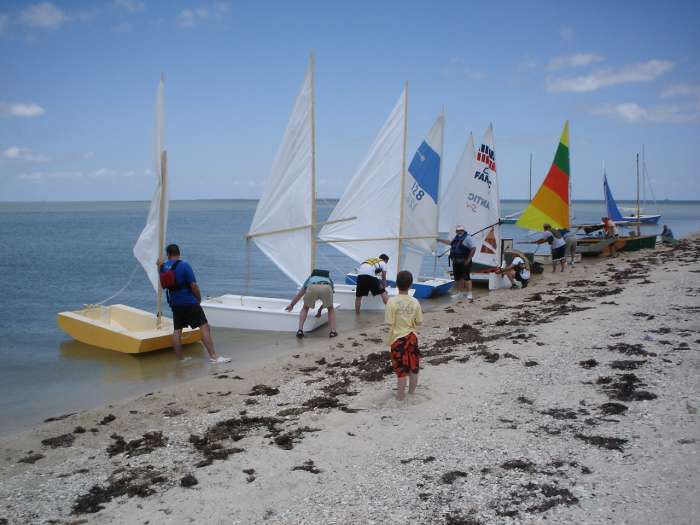
We often do a beach start, that is where we have one foot on sand that isn't underwater. When the whistle blows, we push off and start the race !
To figure who is at what end of the line, we draw popsicle sticks with numbers on them. Sometimes duckers will trade sticks to get a different spot. Like in one race, a ducker traded the 3rd from the front spot for the last place on the end. It turned out to be a choice spot, because a bunch of us got tangled up and he sailed around us. BUT... in the next race, it worked the other way around, everyone tried to sail out around the outside expecting another tangle, and the first couple people in line ended up rounding first.
Duck Buoys
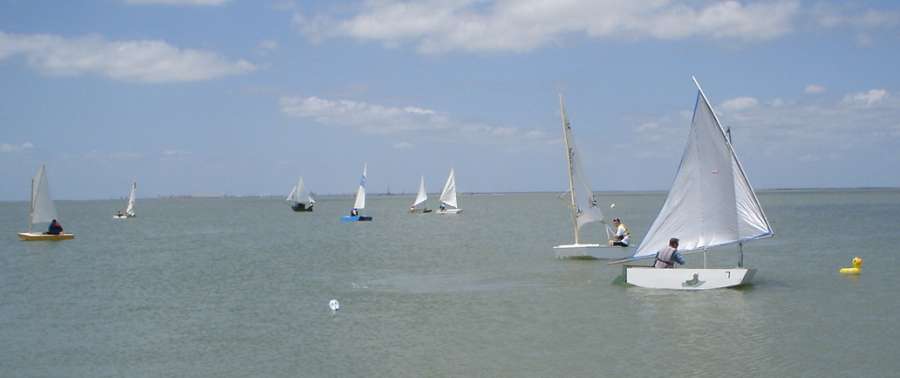
Just to let everyone know how fun we are, we often use inflatable ducks as buoys. You can get them at Walmart, they are the U shaped inflatable toys that kids use in pools.